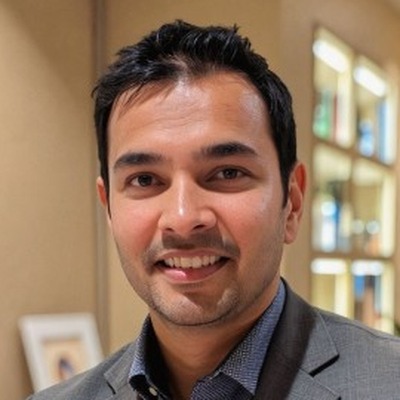
How we met
I met Rahul four years ago at a cricket stadium in Florida, a state neither of us lives in. We had both come to watch India play cricket on US soil.
Our love for cricket started the conversation. That led to other things, and today we are here.
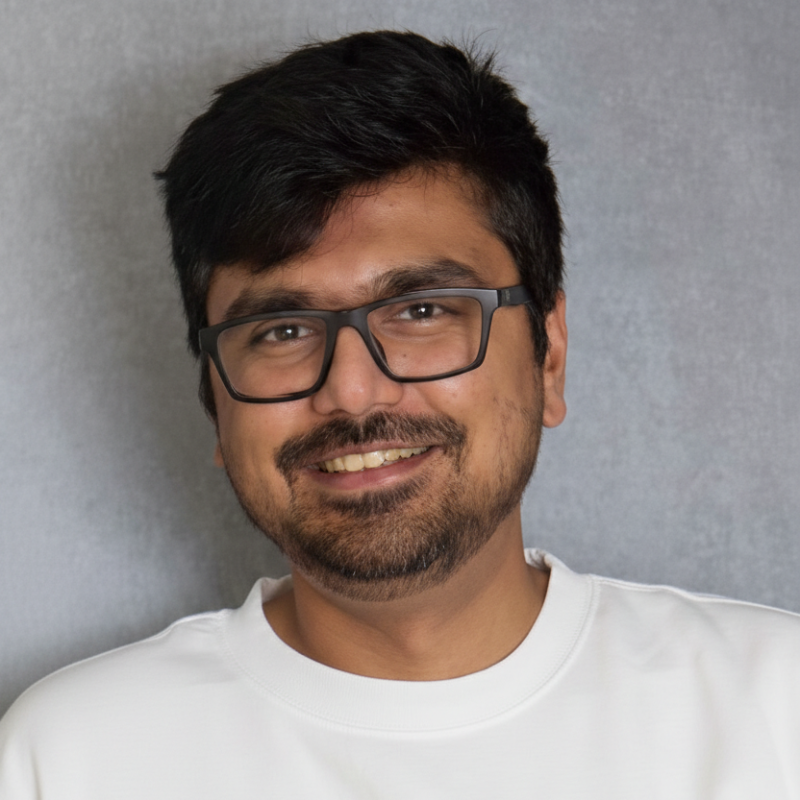
You were a founding engineer on Bloomberg Sports, building baseball analytics for MLB front offices, which eventually got sold to STATS/MLB. What was it like building a sports product inside Bloomberg, a company known for terminals and financial data? And is that where the seed was planted for eventually building your own sports product?
I'll start with a disclaimer: I left Bloomberg over 15 years ago, and expect a lot of things to be different now, so I'll focus on my experience at the time. For those who don't know, the Bloomberg terminals represented an entire suite of "apps" housed inside its proprietary hardware that were built primarily for Wall Street.
Bloomberg Sports was born from this idea that data and analytics can be useful for other industries as well. Three things attracted me: 1) It was a chance to build something cool from scratch, 2) It was in a domain that I loved, given I've always been a sports fan, and 3) We could play with technology that could've been off-limits while building something for the traditional Bloomberg terminal. I was part of that team for over 2 years and genuinely enjoyed the excitement of it.
Looking back, it definitely planted the seed for a sports idea in the future. If nothing else, it made me realize that there could be a market in sports analytics.
You started as a software engineer, then at Flurry you jumped from Lead Engineer to Product Manager. What made you cross that line: a deliberate decision, or did the role just start fitting better than the code? (And now, in the age of AI coding, everyone is some kind of engineer.)
To be perfectly clear, I didn't do kernel-level stuff at Bloomberg! I built apps that helped commodities traders and such, but it was all in the application layer, so to speak.
I think a large part of why I made the jump from SWE to PM had to do with my personality. I'm an extrovert, and enjoy talking to people. When I was a SWE, I could spend all day just writing code and not speaking to anyone. Moreover, when you're an engineer, you end up spending a lot of time thinking of the "how" vs the "what" and the "why", especially early in your career. I enjoyed learning about finance when I worked on commodities, but I didn't truly understand why what we were building was as valuable as it was. Even at Flurry, once I got past the initial learning phase, I found myself more interested in why the company was doing something vs trying to understand how to make it happen. Back then, PM was still a relatively newish thing and I wanted to give it a try. I asked one of the founders and he was kind enough to give me the opportunity.
I totally see the two roles merging at some point in the future, so irrespective of your title, it's always important to ask the "what" and the "why" questions because the "how" is starting to get commoditized.
You spent 9 years at Google, where you built the first mobile Analytics SDK, led App Ads Measurement for six years, then started a new innovation team. That's a long time at one company. What kept you there? And when you finally left in 2022, what was the signal that told you "okay, it's time"?
I'll focus most of this answer talking about the App Ads team at Google: the innovations team was part of that broader team, and while I spent some time on Google Analytics, my time at App Ads was more foundational to my growth.
Thinking back, there were a few reasons I stayed there as long as I did: Firstly, a chance to work on something smallish, relatively speaking, that had the opportunity to be big. Meta (Facebook, back then) were building a tremendously successful App Ads business, so we knew the opportunity was there. I had the chance to be part of some pretty ambitious things, and watched the business grow into something substantial. Second, the people were some of the brightest and best I've ever worked with and being on that team made me grow into the role of a PM. I can confidently say that by the time I left, I was orders of magnitude better at my job than when I had started.
I had been on the same team for 7+ years, let alone the company. After that long in the same space, you get to a point where you don't feel as stretched and that was definitely the case with me. I needed a new challenge, and I felt this itch to try something that had been on my mind for a while. I pitched the innovations team internally and even got what I wanted, but deep down, I knew that wasn't "it". This was early 2022, so the market was still flying and no one had heard of ChatGPT. I felt that while there's never a "perfect" time to take a leap of faith, it seemed like a reasonable amount of risk to take.
You left a Group PM role at Google to build WatchPartee, a cricket prediction market for fans watching live matches. Mid-career, senior title, comfortable. What made you walk away from all of that for a cricket app? Was there a moment during those two years where you thought "what have I done"? How did you think about taking the leap, and how would you prepare for the next one?
As I mentioned in the previous answer, I wanted a challenge. Also, I think I'd gotten to that age where I knew that if I didn't take a leap, it may never happen. Call it midlife crisis, or something else, but there was definitely a voice inside my head that made me want to take that risk. Of course, I have to say that my wife was immensely supportive and had a stable job in Big Tech too, so the tradeoffs seemed reasonable.
To be perfectly honest, the "what have I done?" thoughts didn't come to mind for the first 6-9 months, despite that being the time when interest rates kept ballooning, ChatGPT was released, and then there were all these layoffs. I think you have to have this irrational conviction in your idea, rightly or wrongly, which I did. There's this mindset (which I now realize is totally flawed) of "if you build it, they will come." I naively thought that if I were to build something amazing, it'll naturally get users. The point is that naivete and crazy optimism kept me going for a little while.
It was only when I launched the first version and didn't see the kind of usage I had hoped for that I realized how difficult this was going to be. That's when I started to panic a bit: I didn't really have a backup plan and the job market was probably having its worst moment since 2008, or maybe even worse.
I think if I ever wanted to do something this crazy in the future, I'd definitely build a proof of concept first to get a sense of whether that's something the market is open to. These days, it's a lot easier to do since the barrier to building has gotten almost non-existent. I think you want to put yourself in the shoes of someone who is pitching you an idea. What proof points would you need to see before writing them a check?
WatchPartee was two years of building. What did you learn about yourself as a founder that you didn't know as a Google PM? And what did you learn about cricket fans that surprised you?
Yes, it was two years of intense building, but in phases. For the first 6-9 months, I was running on pure adrenaline. After the first version went nowhere, I realized I needed to change a few things and built a v2, but still nothing. An old friend who was going through a similar journey joined as co-founder and that gave me a second wind. This is when we pivoted to the idea of a real-time predictions system, and while it failed to take off the way we had imagined, I genuinely felt like there was something in the idea and am still immensely proud of what we built.
In terms of learning, I loved going back to building again. I had written a negligible amount of code since transitioning to the PM role and working on WatchPartee helped me rediscover that side of me. There is a satisfaction in the immediate validation of trying something and seeing it work. I think more than anything, I learnt that I could build something from scratch again. Remember, this was before Claude was as good as it is now, so the "AI" I used for building was GitHub Copilot, which was amazing at the time, but far away from what these code-gen tools are now capable of. In some sense, working for a large company in specific roles makes you box yourself into silos. You ask "Is this my job?", or "Am I going to get credit for this?" sorta questions which you cannot afford as a founder. So it gave me a taste of what true ownership actually means, and made me realize that I was capable of more than the boundaries I was setting for myself when in a corp job.
Instead of talking about what I learnt about cricket fans, I'll generalize this into what I learnt about trying to find users in the first place. As I mentioned before, the "If you build it, they will come" attitude is a folly. I don't believe in only building things that people explicitly ask for because that will limit you to the imagination of the masses. However, you need to do two things really well: 1) Figure out a distribution channel. Now this is easier said than done because there is no formula for this. And I'll admit this as a product person: This is much, much harder than building a product, especially in the AI-world. 2) You have to not be too emotionally attached to an idea and pivot quickly if you get a good sense of what people are truly liking (again, getting to the point where you have a reliable signal like that is a win in itself). I believe this is true of not just cricket fans, but any potential customers for anything you want to build.
You went from WatchPartee to Snap (Director of PM), and now back to Google, Search Ads, auction mechanisms. What's it like going back to big tech after being a founder? Does anything feel different the second time around? Do you miss the founder life?
It'll be disingenuous of me to not talk about how hard the job hunting process was in the post-AI market to truly understand my feelings of what it's like going back to corp jobs. Interviewing is hard in general, having to do it after a 10-12 year gap is brutal; having to do it in that market was the perfect storm. Now with that context, I can say that I was grateful to land both jobs. I had a couple of near-misses along the way and while that was gut wrenching at the time, in retrospect, there was a reason things happened as they did.
I think the biggest thing I bring with me this time is perspective. I'm bringing a lot more curiosity, zero ego and a genuine sense of appreciation for running a large and successful business. I'll admit this: When you spend several years at a place like Google, some complacency can set in. This time, I'm well aware of the realities of the world outside the cushy Big Tech bubble, and am determined to hold on to this attitude. This is truly a Rahul v2.0.
Do I miss the founder-life? In all honesty, not yet. There are a lot of things I'm learning since I'm still very new in my current role and I genuinely love what I'm doing. I think social media and the technosphere have hugely glorified what being a founder is like. While there are moments when you feel like everything is worth it, it's difficult 99.9% of the time. The emotional aspect of being a founder is incredibly hard, and I'm just happy to be where I am at the moment.
Your blog is literally called "The Fourth Umpire." Cricket clearly isn't just a hobby. Where do you think tech and cricket intersect in ways still underexplored? If you had unlimited resources and no job, what would you build for cricket? Would you take the leap again?
Cricket means more to me than I can explain in words. It's a huge part of my life and I think about it several times a day!
My thoughts about the intersection of tech and cricket extend to all sports, specifically in the way that sports are consumed by fans. If you think about it, nothing about the experience has changed dramatically since the 80's. Sure, the pictures are more hi-def, but people have to be subject to the same commentary by pundits in suits. Most people watch with their phones next to them, but no platform has truly nailed the second-screen experience. I do think fans would like an experience where they feel like they have a voice too. Twitter had the best opportunity to change this IMO, but I don't know if they never tried this or weren't able to execute. Either way, that's where I think the sports consumption experience can be elevated, and unless someone is able to crack that experience, I will continue to feel like there's a gap there.
As I said, I'm genuinely happy with where I am professionally at the moment, but never say never. Who knows? Maybe, someday, I will have that opportunity :)
You've been an engineer, a PM, a director, a founder, and now a senior IC again. Most careers go in one direction. Yours loops. If you could tell 2006 Rahul (the one writing commodities apps at Bloomberg) one thing about how this all plays out, what would it be?
That's an interesting question! But I think if I had to sum it all up, I'd say this: At every stage of your career, you are going to have a certain idea of what you want, how things should go, and what success looks like. The most important thing is to keep an open mind and ask yourself one question and try to be honest to yourself: Do you genuinely like what you're doing, or are you doing it because it looks good from the outside? If it's the latter, you have to pivot. Ultimately, you have to be able to look past titles and external validation and feel good about waking up on a Monday. For that, only two things matter: 1) Do you like what you're doing, and 2) Do you like the people you work with. If the answer to that question is 'Yes' more than it's not, you will end up being happy with your career, irrespective of what you do.